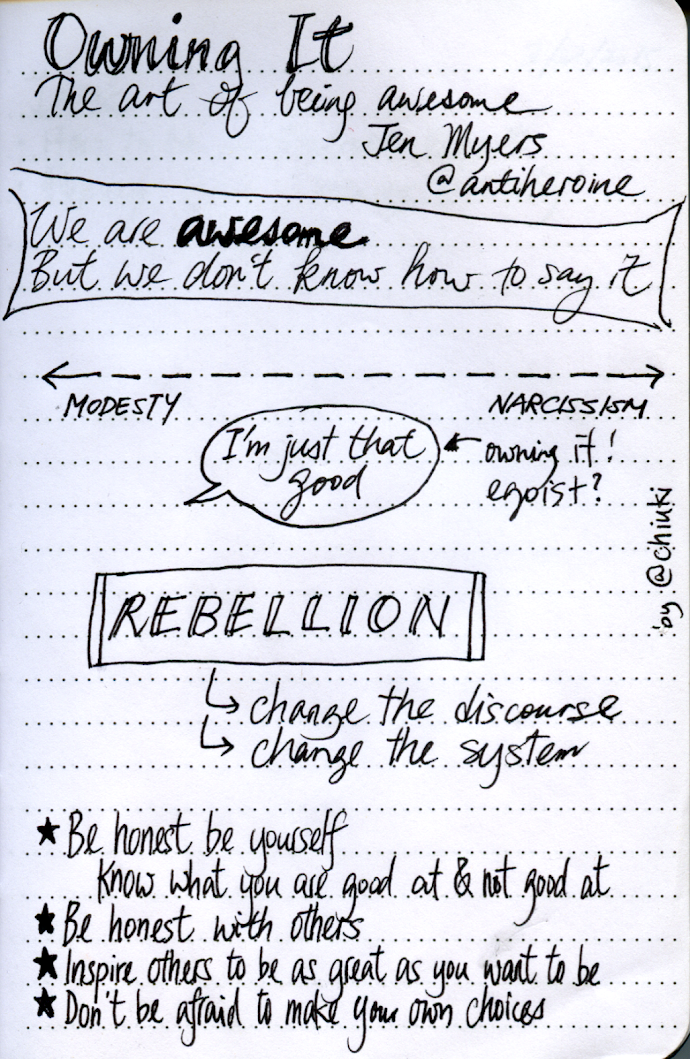
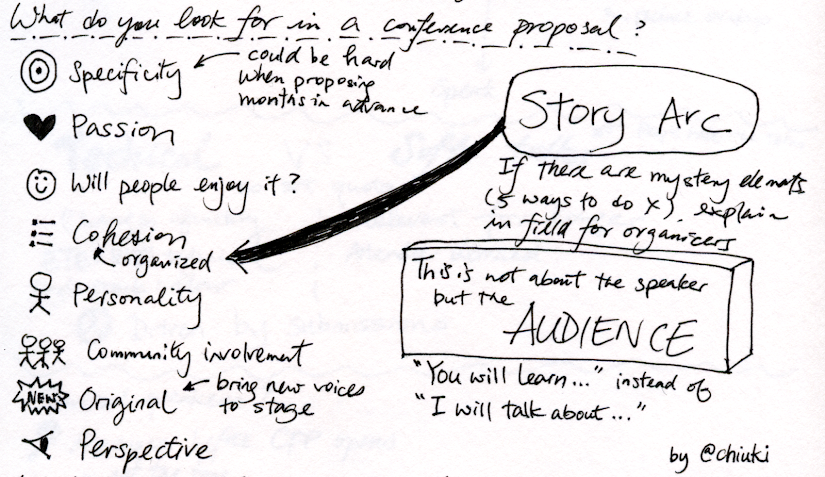
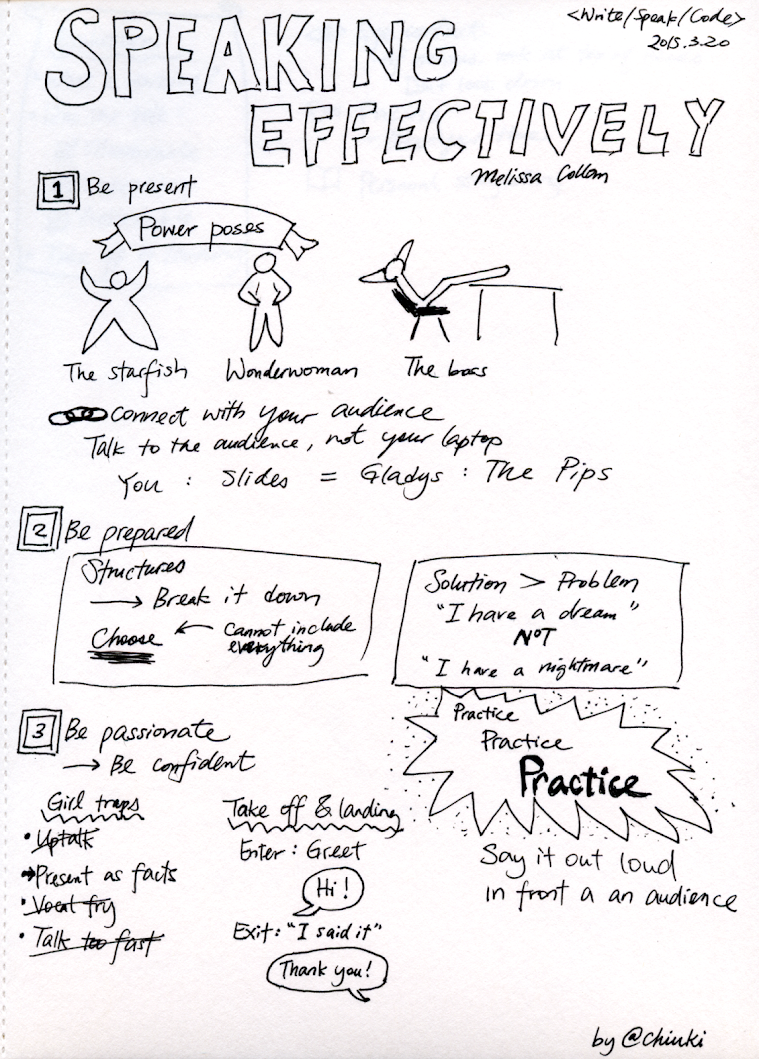
Write/Speak/Code is the first conference I tried sketchnoting, and people loved it. I was really surprised because I still consider myself someone who cannot draw, but somehow I am good at sketchnoting. How come?
Constraint satisfaction problem
Naturally, I will explain my approach with a sketchnote:
When I took Alexis' sketchnotes class three years ago, I was really hung up on the idea that I needed to draw. The repertoire of shapes and objects that I can draw is really small, so I never actually tried sketchnoting after the class.
What changed? I flipped the problem around. I phrased it as a constraint satisfaction problem. I am using a small toolbox to express ideas I heard. And as an engineer, I am extremely good at that.
In the sketchnote above, I wanted to convey the idea that illustrations do not need to be realistic. At first I wanted to draw two trees, one realistic, one not. But alas, I cannot draw a realistic tree. Instead of giving up, I worked around by drawing a box with a dotted line to represent the realistic tree that I am unable to draw. Problem solved.
I am not kidding when I say my toolbox is small. You can see it in the sketchnote. The plain old notes vs sketchnotes part. That is literally my toolbox.
Use a pen
The other breakthrough came when I saw The Sketchnote Handbook by Mike Rohde in my local library:
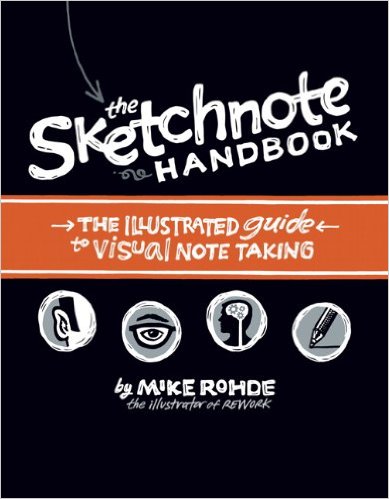
The most important thing I picked up from the book is to use pen instead of pencil. This forces me to always make progress instead of erasing and re-drawing and second-guessing myself. It also makes me more forgiving of my mistakes, and come up with creative ways to fix them.
In the toolbox about bullet lists, I made two bullets with stars, because a single bullet doesn't make a list. And then I realized that I have nothing to more to say. What to do? The second star was already drawn. With ink.
I ended up writing "There is no second point" next to the second star. And you know what? It now emphasizes the fact that it doesn't take much to make sketchnotes.
A lot of serendipity came from using a pen and being forced to make things work.
Find your style
I really enjoyed the The Sketchnote Handbook because it includes examples from many sketchnoters. I pick and choose techniques that works for me:
- Some sketchnotes are very free form, popping images left and right seemingly randomly. That terrifies me. But many examples use a grid style. I came up with my own layout algorithm: top to bottom, and if an item took too little horizontal space, put something next to it. This is very similar to traditional note taking, just using a bit more horizontal space. I can do that.
-
Some sketchnotes fill the whole page, and the pressure to do so paralyzes me. But many examples have whitespace between the items, and that is totally okay.
-
The book recommended using a vertical layout for panels, drawing the face of one panelist on each column. There is no way I can draw portraits. So I skipped that part. But it also showed a few simple ways to draw people. Now Starfish Man is a regular cast member in my sketchnotes.
Share
This is the most potent motivator: Twitter. You know how some people take a screenshot of a block of text to get around the 140 character limit? That looks stupid. But I can totally post a sketchnote to stuff more content into a tweet. And it looks awesome. So awesome that I get lots and lots of retweets, which gave me the confidence to do more sketchnotes, which gets more retweets.
Gotta love that positive feedback loop!